
Food for thought
-
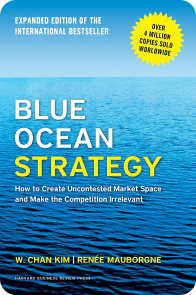
Blue Ocean Strategy
Instead of competing in overcrowded markets (red oceans) saturated with fierce rivalry, the book advocates for creating blue oceans—untapped market spaces ripe with opportunities for growth and innovation. By focusing on value innovation and breaking free from traditional competitive strategies, Blue Ocean Strategy offers a roadmap for businesses to discover and exploit new markets, thereby making the competition irrelevant. This strategy encourages organizations to think creatively, innovate boldly, and navigate towards uncontested market spaces.
-
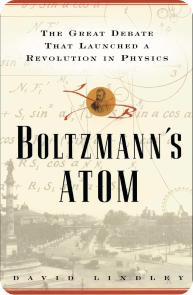
Boltzmann's Atom
Boltzmann's Atom by David Lindley is a captivating exploration of the life and work of Ludwig Boltzmann, the brilliant physicist whose theories fundamentally altered our understanding of the physical world. This book delves into Boltzmann's pioneering work in statistical mechanics and thermodynamics, elucidating how he connected the behavior of atoms to the observable properties of matter. Through Lindley's engaging narrative, readers gain insight into Boltzmann's struggles and triumphs, as well as the profound impact of his ideas on modern science.
-
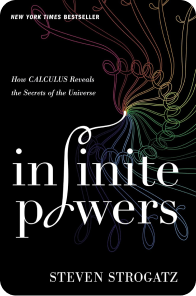
Infinite Powers
Infinite Powers by Steven Strogatz is a mesmerizing journey into the world of calculus and its profound impact on understanding the universe. This book beautifully illustrates how the concepts of calculus, from its inception by Newton and Leibniz to its modern applications, have revolutionized science, engineering, and beyond. Strogatz demystifies complex ideas, showing how calculus reveals the hidden patterns and continuous changes in nature. Infinite Powers is celebrated for its ability to illuminate the elegance of mathematical thinking and inspire readers to appreciate the limitless power of calculus in shaping our world.
-

Range: Why Generalists Triumph in a Specialized World
Why Generalists Triumph in a Specialized World by David Epstein is a compelling examination of the advantages of a broad skill set in a highly specialized world. Epstein challenges the conventional wisdom that early specialization is the key to success. Through a series of captivating stories and research findings, he demonstrates how generalists—those who embrace diverse experiences and skills—are often more innovative and adaptable. This book explores how a wide-ranging approach to learning and problem-solving can lead to exceptional achievements in various fields. Range inspires readers to cultivate versatility and breadth in their personal and professional lives.
-
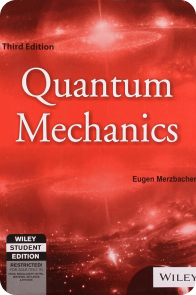
Quantum Mechanics
Quantum Mechanics by Eugen Merzbacher is a foundational text that delves into the principles and complexities of quantum theory. Renowned for its clarity and depth, this book provides a comprehensive introduction to the fundamental concepts of quantum mechanics, including wave functions, uncertainty principles, and quantum states. Merzbacher's detailed explanations and rigorous approach make this an essential resource for students and researchers alike. Through this book, readers gain a profound understanding of the quantum world, its paradoxes, and its profound implications for modern physics and technology. Quantum Mechanics stands as a vital guide for anyone seeking to explore the mysteries of the subatomic universe.
-
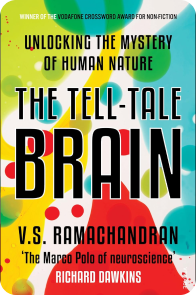
The Tell-Tale Brain
The Tell-Tale Brain by V.S. Ramachandran is an intriguing exploration into the complexities of the human brain and the mysteries of the mind. Renowned neuroscientist Ramachandran delves into the intricacies of brain function, addressing topics such as perception, consciousness, and the neurological basis of self-identity. Through fascinating case studies and innovative research, he uncovers the ways in which brain anomalies reveal deeper insights into how our minds work. This book offers a captivating journey into the frontiers of neuroscience, making complex ideas accessible and engaging. The Tell-Tale Brain is a must-read for anyone curious about the profound workings of the human mind.
-
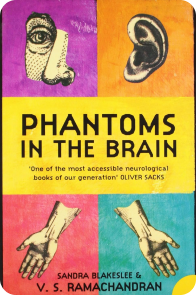
Phantoms in the Brain
Phantoms in the Brain by V.S. Ramachandran and Sandra Blakeslee is a riveting exploration of the human brain and its extraordinary capabilities. The book delves into the fascinating world of neurological disorders, where patients experience phenomena such as phantom limbs, out-of-body experiences, and other perceptual anomalies. Through a series of compelling case studies, Ramachandran reveals how these unusual conditions provide insights into the normal workings of the brain. By blending scientific rigor with engaging storytelling, Phantoms in the Brain offers readers a deep understanding of how our brains construct reality, consciousness, and our sense of self.
-
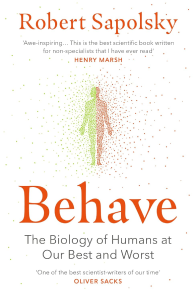
Behave by Robert Sapolsky
Behave by Robert Sapolsky is a masterful exploration of the science behind human behavior. This comprehensive book delves into the biological and environmental factors that influence our actions, from the neural processes occurring milliseconds before an action to the evolutionary pressures shaping our species over millennia. Sapolsky expertly weaves together insights from neuroscience, psychology, anthropology, and evolutionary biology to explain why we do what we do. Through engaging anecdotes and rigorous scientific analysis, Behave offers a profound understanding of the complexities of human behavior, making it an essential read for anyone interested in the intricate workings of the human mind and society.
-
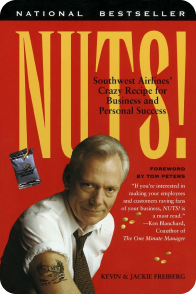
Nuts!
Nuts! by Herb Kelleher is an inspiring account of the innovative and unconventional approach that led to the success of Southwest Airlines. Co-authored with Kevin and Jackie Freiberg, the book captures Kelleher's unique leadership style and the corporate culture he fostered, emphasizing employee satisfaction, customer service, and a fun-loving work environment. Through a blend of anecdotes, business strategies, and personal insights, Nuts! reveals how Southwest Airlines achieved profitability and customer loyalty in the competitive airline industry. This book offers valuable lessons for leaders and entrepreneurs on the importance of creativity, passion, and putting people first in building a thriving business.
-
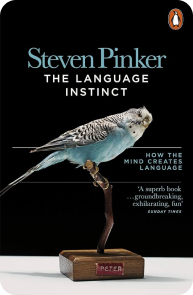
The Language Instinct
The Language Instinct by Steven Pinker is a fascinating exploration of the origins and nature of human language. Pinker, a renowned cognitive scientist, argues that language is a biological adaptation unique to humans, much like the web-building ability of spiders or the echolocation of bats. Through engaging prose and vivid examples, he explains how children naturally acquire language, the universal grammar underlying all languages, and the evolutionary processes that may have shaped our linguistic abilities. The Language Instinct offers profound insights into the complexities of language, making it an essential read for anyone interested in understanding the innate capacities of the human mind.
-
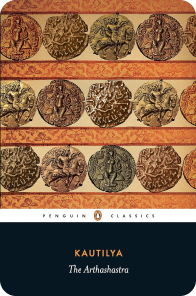
Arthashastra
The Arthashastra, authored by Kautilya (also known as Chanakya), is an ancient Indian treatise on statecraft, economic policy, and military strategy. Written in the 4th century BCE, this comprehensive guide provides a detailed account of governance, diplomacy, and administration. Kautilya's insights into politics, economics, and ethics have made the Arthashastra a seminal work, influencing leaders and scholars for centuries. The text covers a wide range of topics, including the duties of a king, the role of ministers, taxation, law, and espionage, offering timeless wisdom on ruling a kingdom effectively. The Arthashastra remains a critical resource for understanding ancient political thought and its relevance to modern governance and strategy.
-

The Art of War
The Art of War by Sun Tzu is a timeless masterpiece on strategy, tactics, and military philosophy. Written over 2,500 years ago, this ancient Chinese text remains highly influential in both military and civilian contexts. Sun Tzu's teachings emphasize the importance of adaptability, strategic planning, and understanding both oneself and the enemy. The book covers various aspects of warfare, including the use of spies, the significance of terrain, and the value of deception. The Art of War's profound insights extend beyond the battlefield, offering valuable lessons for leadership, business strategy, and personal development, making it an essential read for anyone seeking to master the art of strategic thinking.
The book images displayed are for representation purposes only.
-
Word2Vec research paper
The Word2Vec research paper by Tomas Mikolov and his team at Google is a seminal work in the field of natural language processing. Published in 2013, this paper introduced a novel approach for creating word embeddings using neural networks, which has since become a cornerstone technique in machine learning and NLP. The Word2Vec model learns vector representations of words from large text corpora, capturing semantic relationships in a continuous vector space. By using two main architectures—Continuous Bag of Words (CBOW) and Skip-gram—the model efficiently predicts word contexts, significantly improving the performance of various NLP tasks. This groundbreaking research has paved the way for numerous advancements in understanding and processing human language with artificial intelligence.
-
Attention by Dmitri Bahdanau
Attention by Dmitri Bahdanau is a groundbreaking work in the field of artificial intelligence and natural language processing. Bahdanau introduced the attention mechanism in his influential paper "Neural Machine Translation by Jointly Learning to Align and Translate," co-authored with Kyunghyun Cho and Yoshua Bengio. This mechanism allows models to focus on relevant parts of the input sequence, significantly improving the performance of neural machine translation and other sequence-to-sequence tasks. The attention mechanism has since become a fundamental component in many advanced AI models, including transformers and BERT, revolutionizing the way machines understand and generate human language. This pioneering work has paved the way for numerous advancements in AI, making complex tasks more accurate and efficient.
-
Attention is All You Need
Attention is All You Need is a seminal research paper authored by Ashish Vaswani, Noam Shazeer, Niki Parmar, Jakob Uszkoreit, Llion Jones, Aidan N. Gomez, Łukasz Kaiser, and Illia Polosukhin. Published in 2017, this paper introduced the Transformer model, a revolutionary architecture in the field of natural language processing. Unlike traditional models that rely on recurrent or convolutional layers, the Transformer uses self-attention mechanisms to process sequences of data in parallel, allowing for more efficient training and improved performance on tasks such as translation, summarization, and text generation. The introduction of the Transformer has had a profound impact on AI research, leading to the development of powerful models like BERT, GPT, and T5, which continue to push the boundaries of what machines can understand and generate in human language.
-
LoRA: Low-Rank Adaptation of Large Language Models
LoRA (Low-Rank Adaptation) is an innovative method developed to optimize the adaptation of large pre-trained language models for specific tasks. By introducing low-rank decomposition matrices into each layer of the Transformer architecture, LoRA significantly reduces the number of trainable parameters and computational requirements. This approach maintains high performance while minimizing the resource intensity typically associated with full model fine-tuning. LoRA's efficiency makes it a game-changer in the field of natural language processing, enabling broader accessibility and application of advanced language models across various domains.
-
A Mathematical Theory of Communication
A Mathematical Theory of Communication by Claude E. Shannon, published in 1948, is a groundbreaking work that laid the foundation for modern information theory. Shannon introduced key concepts such as information entropy, which measures the uncertainty in a message, and channel capacity, the maximum rate of error-free data transmission. His work established the mathematical framework for encoding, transmitting, and decoding information efficiently, influencing the development of digital communication technologies, data compression, and error correction codes. Shannon's paper remains a cornerstone in the fields of telecommunications and computer science, shaping how information is processed and communicated globally.
-
Learning Representations by Back-Propagating Errors
Learning Representations by Back-Propagating Errors by David E. Rumelhart, Geoffrey E. Hinton, and Ronald J. Williams (1986) is a landmark paper in artificial intelligence. It introduced the backpropagation algorithm, a method that revolutionized the training of neural networks by efficiently calculating gradients needed for weight optimization through gradient descent. This breakthrough allowed multilayer neural networks to learn complex representations and solve non-linear problems, laying the groundwork for modern deep learning techniques used in various applications like image recognition and natural language processing. The paper remains foundational in the study and application of neural networks.
-
On the Opportunities and Risks of Foundation Models
On the Opportunities and Risks of Foundation Models by Rishi Bommasani and collaborators is a comprehensive examination of the paradigm shift in AI with the advent of large-scale models like BERT, GPT-3, and DALL-E. These models, trained on extensive datasets, are adaptable to a wide range of downstream tasks. The paper discusses the central yet incomplete nature of these "foundation models," highlighting their capabilities, technical principles, applications, and societal impacts. The report provides a detailed analysis of the models' capabilities across various domains such as language, vision, robotics, and human interaction. It also addresses the technical aspects, including model architectures, training procedures, and data management. Furthermore, the paper explores applications in critical fields like healthcare, law, and education, emphasizing both the potential benefits and the associated risks, such as ethical concerns, equity, and environmental impact.
-
The Kolmogorov-Arnold Networks (KAN)
White Paper explores the theoretical foundation and applications of KANs, a powerful approach to modeling complex systems through neural networks. Inspired by the work of Andrey Kolmogorov and Vladimir Arnold, this architecture leverages their theorem on representing multivariate functions, enabling KANs to capture intricate, high-dimensional relationships with remarkable efficiency. The paper details the underlying mathematical principles, network structure, and potential use cases in fields like artificial intelligence, physics, and data science. By providing a robust framework for understanding non-linear dynamics, KANs offer a breakthrough in computational modeling and predictive analysis across diverse domains.